
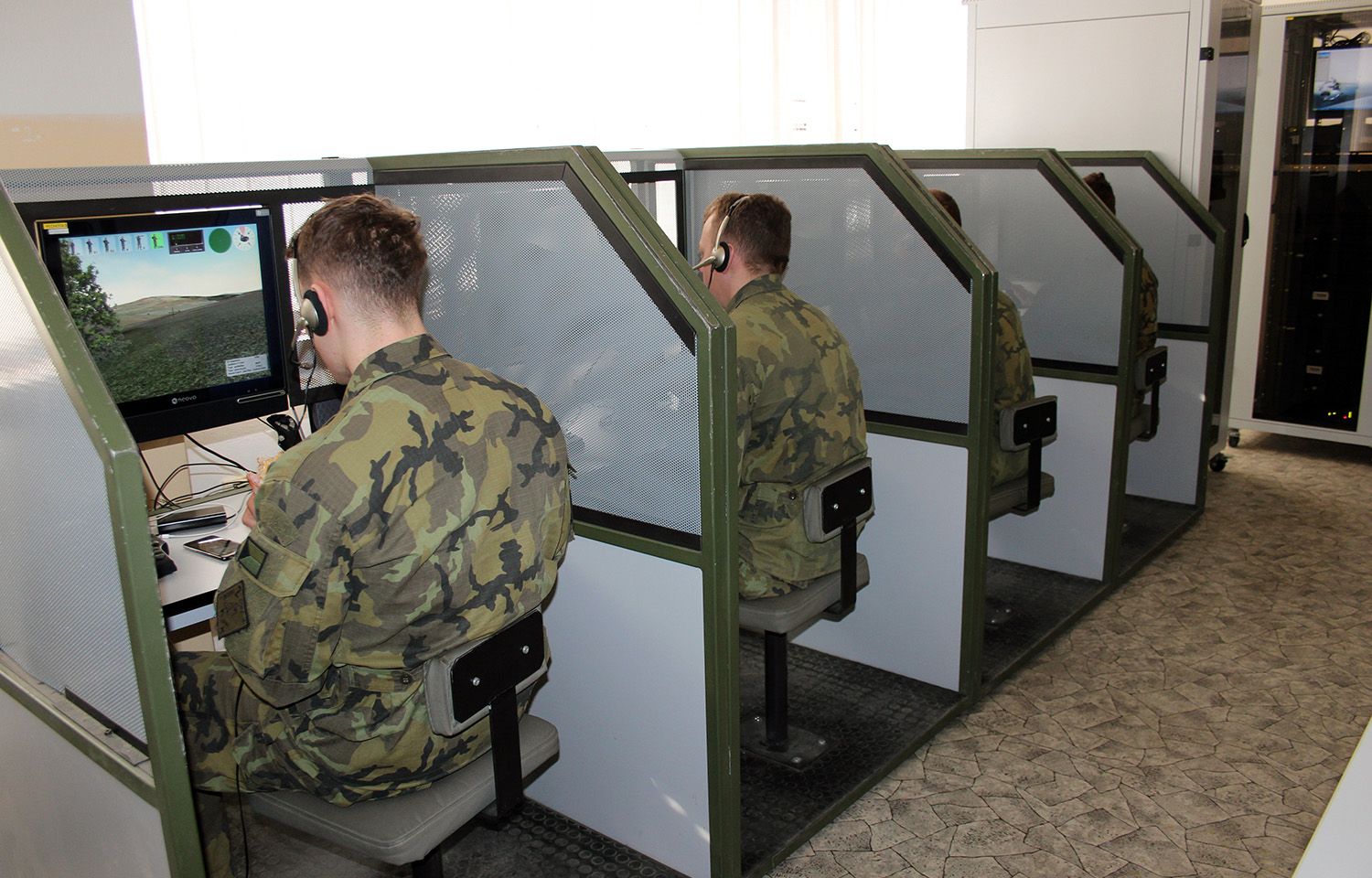


In fields that demand high-stakes decision-making, like public safety and law enforcement, traditional training methods often face significant constraints. Relying solely on classroom learning, scripted roleplay, or live-fire ranges can limit a trainee’s exposure to unpredictable, complex scenarios. To bridge this critical gap, advanced virtual reality (VR) tactical training simulators have emerged as a vital tool. These simulators provide a hyper-immersive, highly flexible platform that allows public safety professionals to learn, practice, and master critical operational skills in a safe, controlled environment.
A brief insight into the use of tactical training simulators
The primary use of modern tactical training simulators is the ability to transport trainees into realistic, high-quality, and richly populated virtual environments. These simulators use next-generation technology, like high-fidelity graphics, true spatial audio, and powerful head-mounted displays (HMDs), in order to replicate complex, real-world incidents with unparalleled precision. Rather than working through a limited, pre-recorded script, trainers can utilize open-ended scenario creation and environment building tools to design any situation imaginable. This powerful capability allows agencies to recreate actual, local incidents or construct specific tactical challenges, ensuring that the training directly mirrors the active environments professionals encounter in the field.
Beyond physical tactics, tactical simulators are heavily used to train critical cognitive and communication skills. Instructors can easily build scenarios that challenge and evaluate a trainee’s communication, crisis intervention, and complex decision-making processes under pressure. This includes integrating institutional frameworks like ICAT (Integrating Communications, Assessment, and Tactics) and response-to-resistance or use-of-force decision-making skills. Because the platform is entirely digital, agencies can choose to train all day with no physical force whatsoever, focusing purely on verbal de-escalation, or transition fluidly into high-risk tactical options. This open-ended control provokes critical thinking, requiring trainees to read a situation dynamically rather than merely following a predictable training script.
When high-risk skills and tools must be deployed, precision is non-negotiable. Tactical simulators provide advanced tracking technology that enables native hand tracking alongside independently tracked rifles, pistols, tasers, and other duty equipment. This sub-millimeter tracking accuracy is essential because it precisely mimics real-world movements and weapon manipulation. Trainees can repeatedly practice room entries, clearing buildings, utilizing cover or concealment, and moving dynamically through a space. This allows them to build the exact muscle memory required for the field without the real-world risks, liabilities, or material costs associated with live-force training.
Real-world operations are rarely solitary endeavors; they require seamless coordination and team cohesion. Modern tactical simulators address this by offering multi-trainee and multi-trainer capabilities. Multiple simulation units can be networked together, allowing up to 16 trainees to participate in a single, unified scenario simultaneously. This multi-user framework is invaluable for teaching team movements, tactical communication, and command-and-control hierarchies during large-scale or multi-agency incidents, ensuring that an entire squad can synchronize their response in real time.
Ultimately, tactical training simulators provide public safety agencies with a revolutionary framework for readiness. By combining hyper-immersive visuals and sub-millimeter tracking with open-ended instructor control, these systems deliver a safe, accessible, and deeply impactful learning environment.